
Gregor Skumavc and Martina Kolar are Corinth Pilot Educators from Jesenice, Slovenia. They give classes at Elementary School of Polde Strazisar that focuses on Special needs education and uses Corinth Classroom practically in lessons. They both are amazing teachers but they also inspire other teachers with innovative learning practices. In late May they presented Corinth Classroom content on an international conference in Slovenia and now they shared their experiennce with us.
*CONTAINS A LESSON PLAN FOR LOWER STANDARD CURRICULUM*

SIRIKT, how the conference is called, is organized every year in a beautiful town Kranjska Gora in Slovenia. Martina and Gregor presented how they used Corinth Classroom in their lessons. The event focuses on the use of ICT in learning environments so their topic fit very well.
“Students are always eager to interact with Corinth’s content. It always provides the 'WOW' effect,” told us Gregor to sum up his practical experience with Corinth Classroom. What did he say about the conference? Read on.
This year, the presentation of Corinth Classroom was held at the “demo” session, where good practices from various schools were presented. Martina described the main features of the app itself and how she used it with her class.
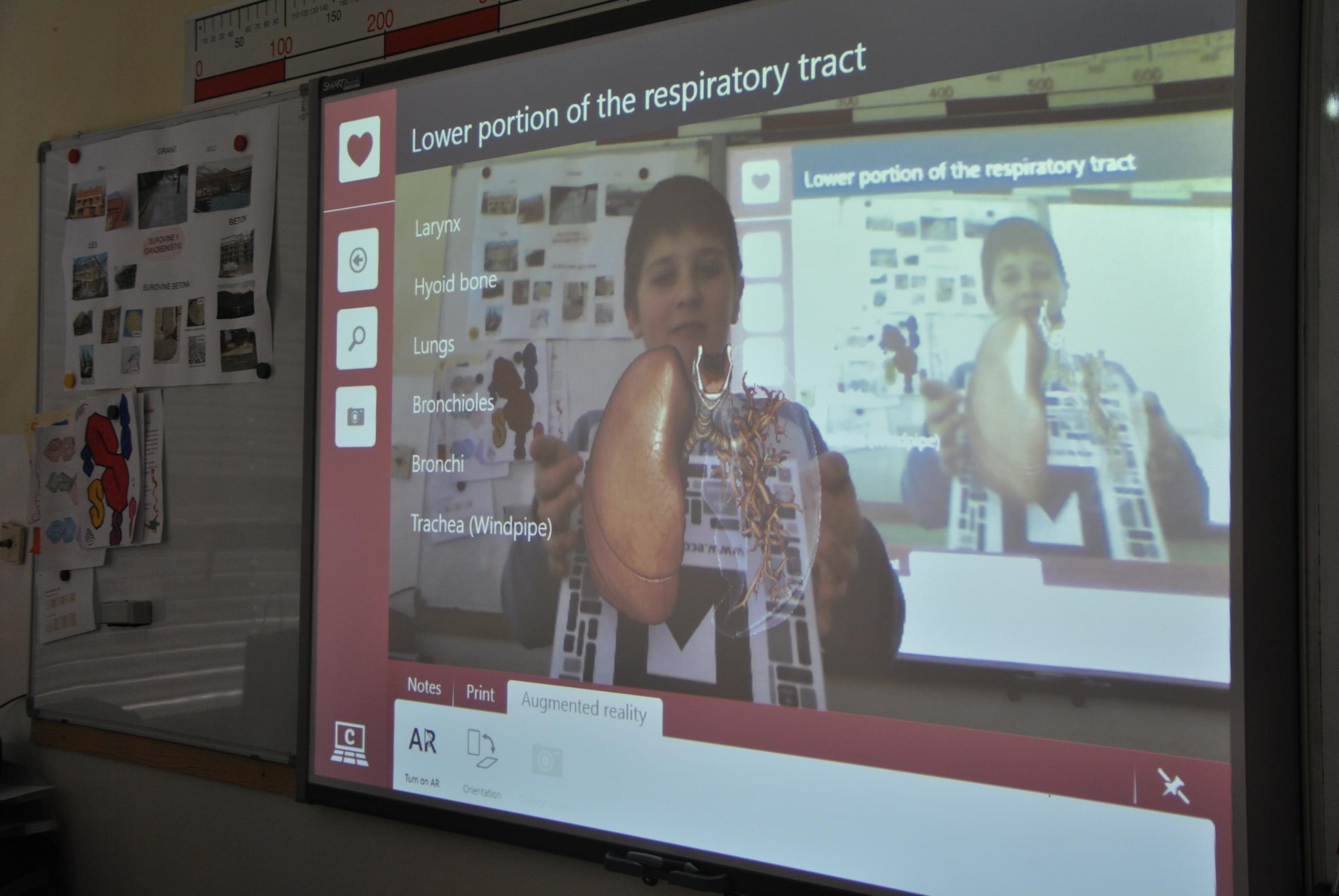
She used CC models as an addition to the traditional lesson materials. The augmented reality feature was great for pupils as they gained a better understanding about the position of the heart and lungs in their own bodies.
We have also discussed the ability to 3D print models for pupils, which definitely is a good thing.
The atmosphere at SIRIKT is always nice. I believe we have a broad community of teachers who are keen to use technology in their classrooms. The conference is held in a beautiful town, Kranjska Gora; the surroundings themselves give a nice touch to overall impressions for attendees.
We have also managed to put the Classroom app on devices at the Microsoft booth in the main hall, where visitors could get a hands-on preview. All listeners to Martina's presentation agreed that a tool like Classroom can definitely contribute to better understanding of pupils and is a good motivation to encourage discovering in children.
I believe Corinth Classroom is useful everywhere it applies to the curriculum as a tool to make lessons more concrete, easier to understand.
The ability to pick a part of a model and dim the rest helps to gain attention from students with attention deficit; it can also be used to learn new words in foreign language. If we had more devices (tablets), it would definitely be used for students to use the app themselves in the lessons. Now we use it primarily with interactive whiteboards.
You can find Martina's lesson plan HERE.